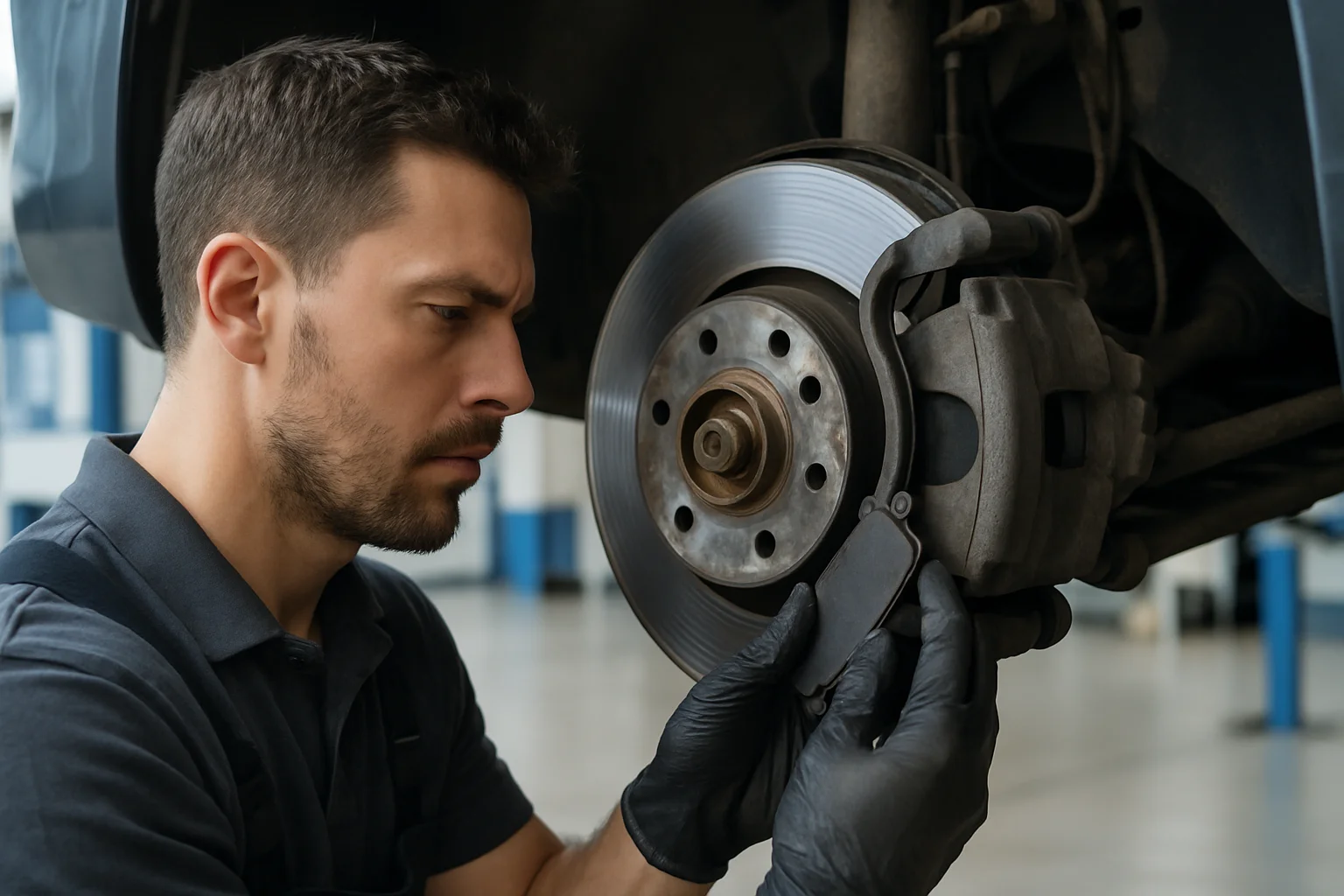
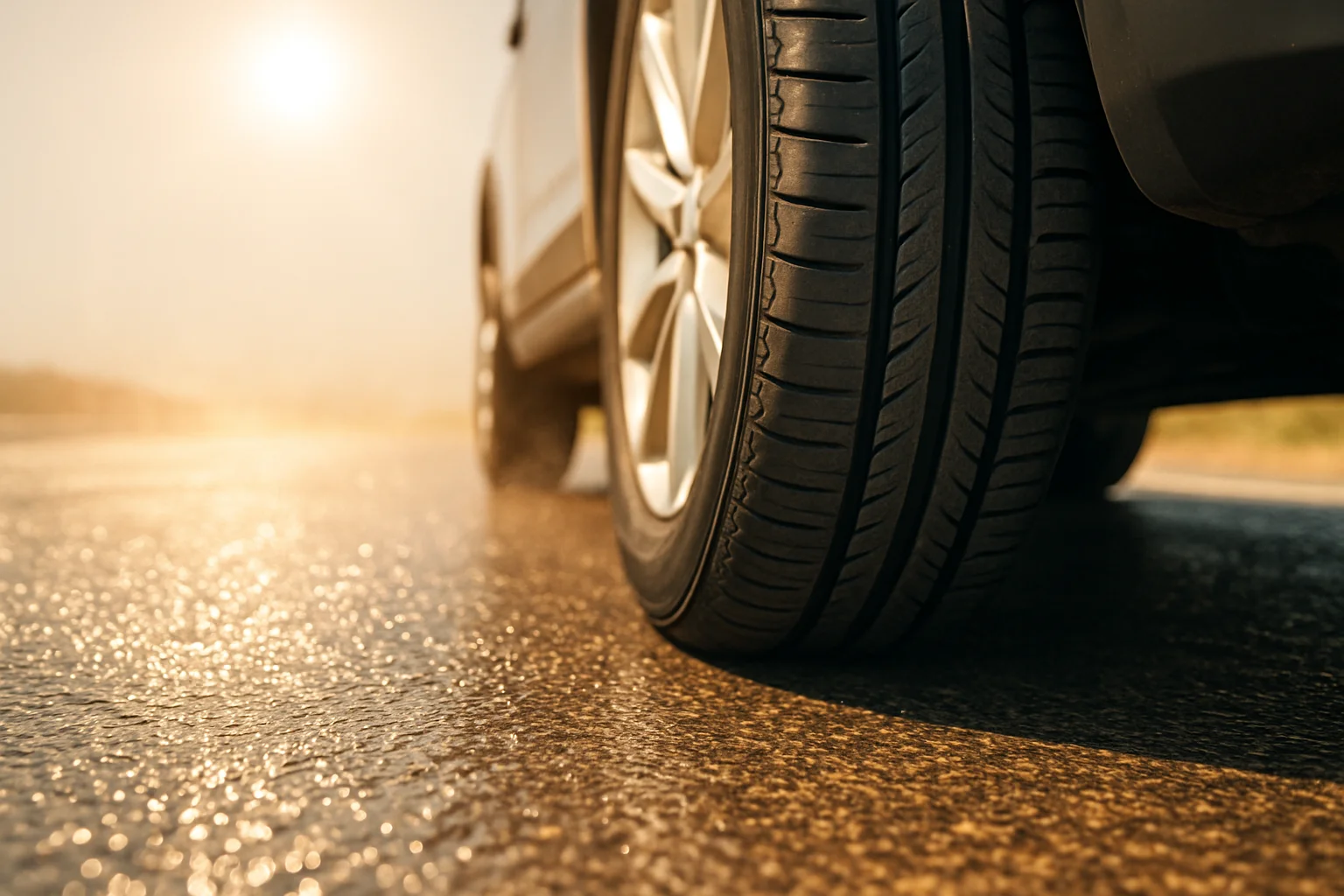
Hot asphalt at 40 °C air temperature puts tires under heavy thermal stress, increases pressure and accelerates wear. Road surfaces exposed to direct sun can become far hotter than the surrounding air, so your tires are not only dealing with hot weather but also constant contact with a scorching surface.
At ReFiT d.o.o. in Ljubljana, summer often brings tire issues that were already developing but become visible faster in extreme heat. Small cracks, low pressure, aging rubber or previous impact damage can turn into a safety concern more quickly during a heatwave.
How hot can asphalt get when the air is 40 °C?
Asphalt can reach around 60 °C or more when the outside temperature is 40 °C. The exact surface temperature depends on sunlight, wind, traffic, asphalt color and the time of day.
The tire area in direct contact with the road is exposed to the highest stress. While driving, tires heat up even more because of friction, vehicle load, speed and braking, which makes tire condition especially important in summer.
What happens to tire pressure in extreme heat?
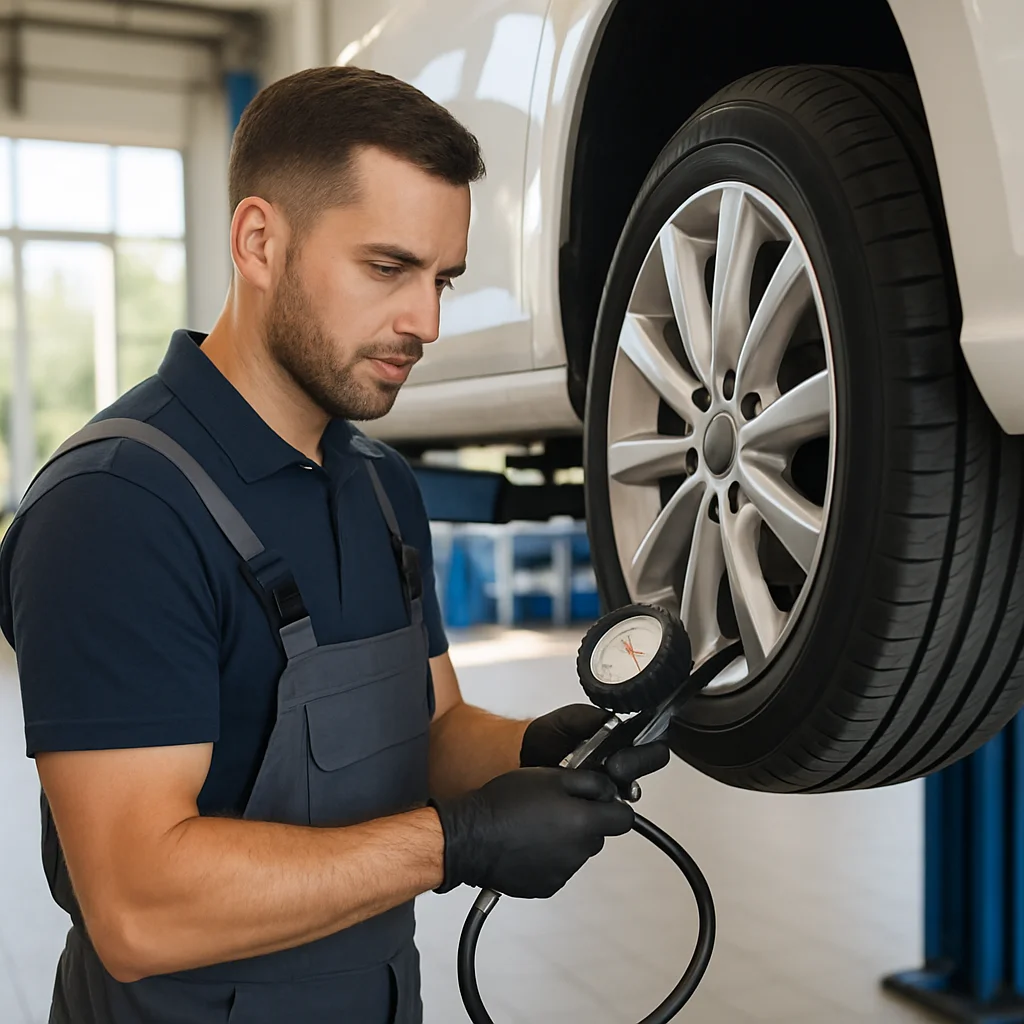
Tire pressure rises in hot conditions because the air inside the tire warms up and expands. This does not mean you should release air immediately after driving, because pressure readings on hot tires can be misleading.
The best time to check pressure is in the morning or after the vehicle has been parked long enough for the tires to cool down. Follow the vehicle manufacturer’s recommended pressure, usually found on a door pillar sticker, fuel cap label or in the owner’s manual.
Why is low tire pressure especially risky in summer?
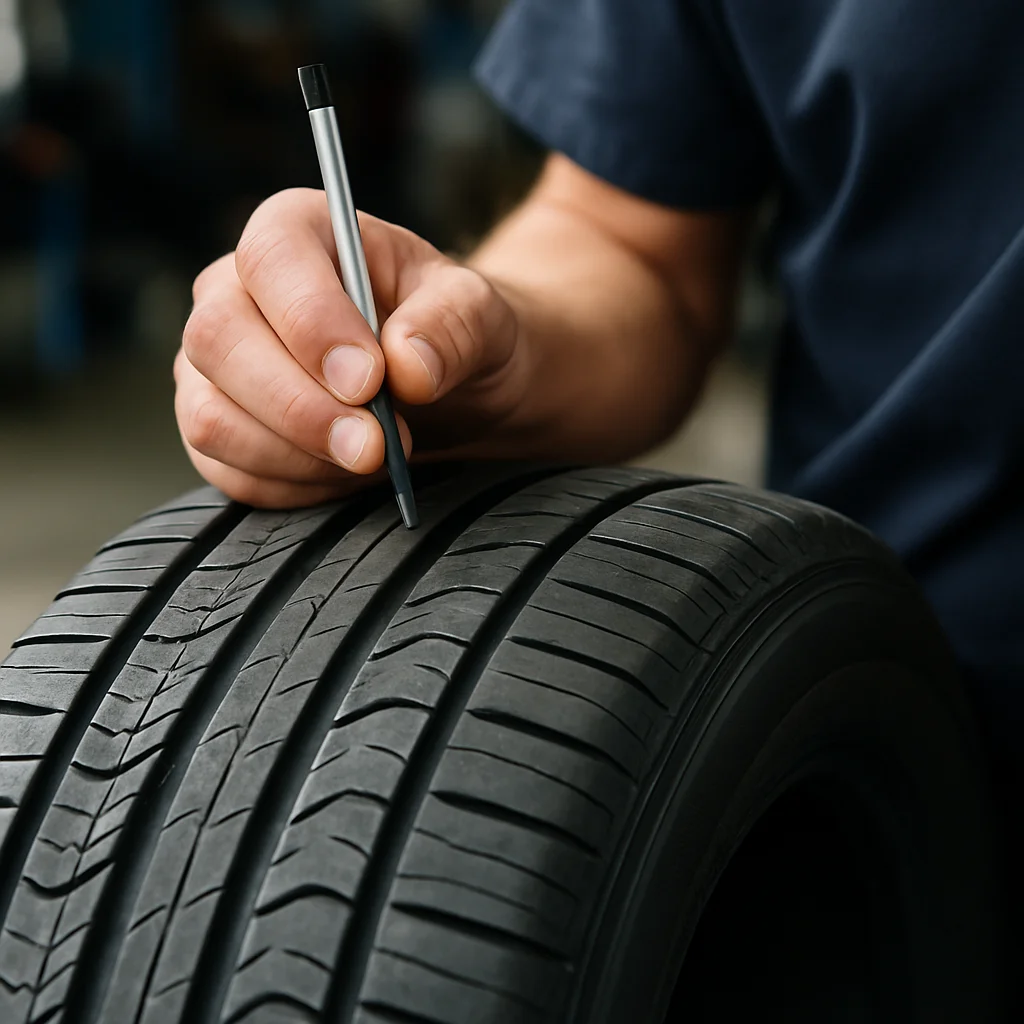
Low tire pressure is especially risky in summer because the tire flexes more and generates additional heat. Excessive heat can speed up wear, damage the internal tire structure and, in severe cases, increase the risk of sudden tire failure.
The risk is higher with fully loaded passenger cars and light commercial vehicles up to 3.5 tons. More weight means more work for the tires, so pressure should match the load and long drives on underinflated tires should be avoided.
Does heat accelerate tread wear?
Heat can accelerate tread wear, especially with aggressive driving, rapid acceleration and hard braking. Very hot rubber may wear faster, while incorrect pressure or poor wheel alignment can make the wear pattern even worse.
Uneven tread wear on the inner or outer edge is not just a cosmetic issue. It may indicate incorrect alignment, worn suspension parts or a long period of driving with the wrong tire pressure.
Which tire damage signs should you check?
Start by checking for cracks, bulges, cuts, foreign objects and uneven wear. These checks are useful before a long trip, after driving on rough roads and whenever the vehicle starts vibrating or pulling to one side.
- Sidewall cracks: may indicate aging rubber or long exposure to sunlight.
- A bulge on the tire: may be a sign of internal structural damage and requires immediate inspection.
- A nail or screw in the tread: may not cause immediate air loss, but it needs professional assessment.
- Uneven wear: can point to incorrect pressure, alignment issues or worn suspension components.
How can you protect tires in severe heat?
You can protect tires in severe heat by maintaining correct pressure, driving smoothly and inspecting them regularly. A few simple habits before driving can significantly reduce risk.
- Check pressure when the tires are cold.
- Inspect tread and sidewalls.
- Avoid unnecessary overloading.
- Take breaks on longer trips, especially with a fully loaded vehicle.
- Avoid harsh acceleration, hard braking and aggressive cornering.
- Park in the shade whenever possible.
When should you book a tire inspection?
You should book a tire inspection as soon as you notice damage, vibration, pressure loss or unusual wear. A preventive check is also recommended before holidays, long business trips or regular delivery driving in hot weather.
ReFiT d.o.o. in Ljubljana provides tire services, servicing for passenger and light commercial vehicles up to 3.5 tons, and assistance when a tire issue makes the vehicle unsafe to drive. For both companies and private drivers, a quick inspection is often the most cost-effective way to prevent a breakdown or delay.
Summer rule: if it feels hot to you, it is even hotter for your tires. Do not wait for the problem to appear on the motorway.
Are older tires a bigger risk in hot weather?
Older tires are a bigger risk in hot weather because rubber loses flexibility over time. Even if there is still visible tread, cracks, a hardened compound or previous damage may reduce safety.
You can check tire age by reading the DOT code on the sidewall. If you are unsure whether a tire is still suitable for use, a professional inspection is the safest option because tread depth alone does not tell the whole story.
What is the most important summer tire tip?
The most important summer tire tip is to check pressure regularly and never judge tires by appearance alone. A tire can look normal while being underinflated, internally damaged or unevenly worn.
If you are preparing for a holiday, carrying cargo or planning a longer drive during a heatwave, book a tire check with ReFiT. You can find more information about the services at refit.si.
Frequently asked questions
- How hot can asphalt get when the air temperature is 40 °C?
- In direct sunlight, asphalt can reach around 60 °C or more, depending on the surface, wind and time of day.
- Should I let air out of my tires in summer?
- Do not release air from hot tires immediately after driving. Check pressure when the tires are cold and follow the vehicle manufacturer’s recommendations.
- Why is low tire pressure dangerous in hot weather?
- Low pressure causes more tire flexing, additional heat buildup, faster wear and a higher risk of tire damage.
- When should I visit a tire specialist?
- Visit a tire specialist if you notice cracks, a bulge, a foreign object, pressure loss, vehicle vibration or uneven tread wear.
- Does heat affect light commercial vehicles more?
- Yes, especially when they are fully loaded. More weight increases tire stress, so correct pressure and inspection before driving are essential.